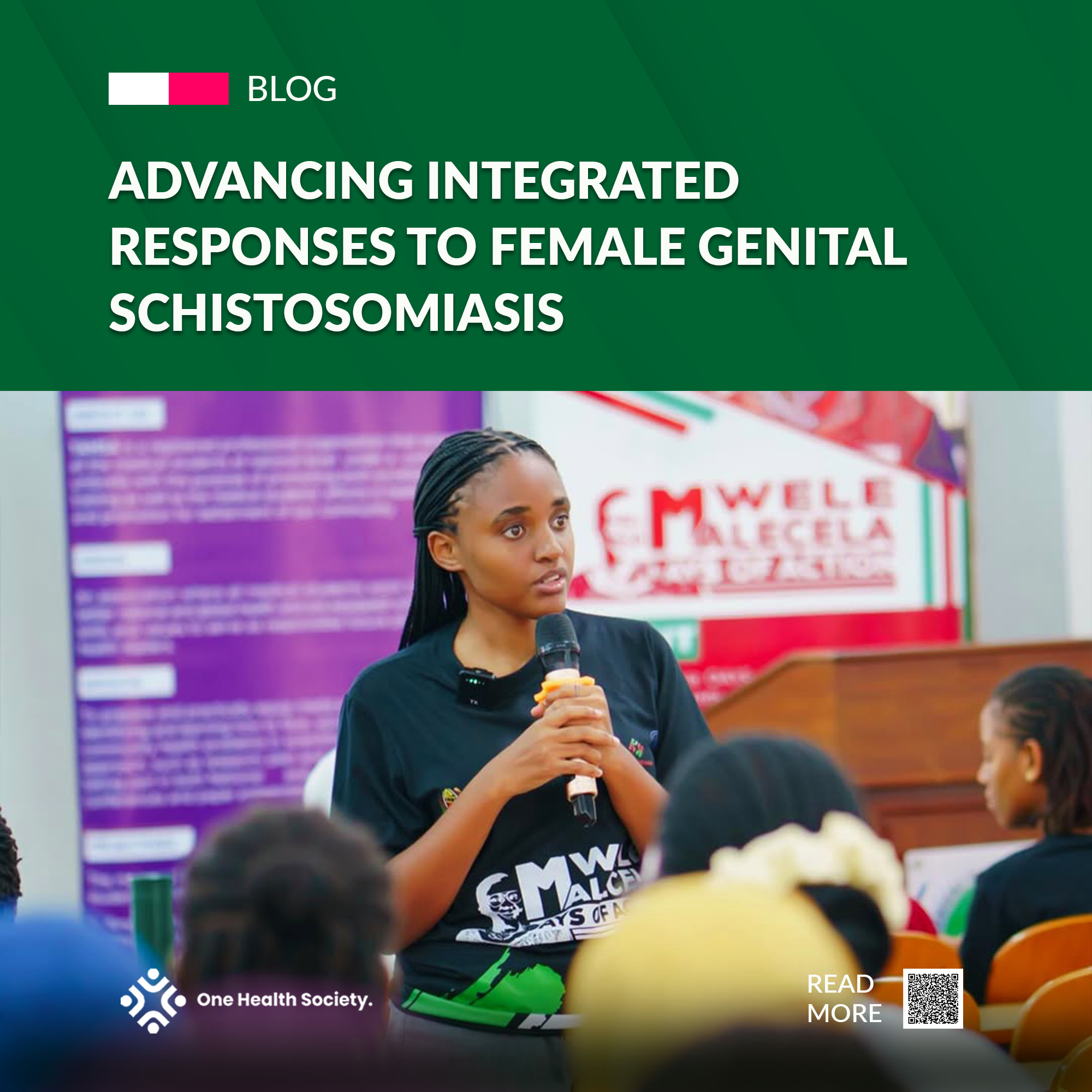
In January 2026, the Mwele Malecela Days of Action (MweleDOA) program advanced key milestones that support the integration of Female Genital Schistosomiasis (FGS) into sexual and reproductive health (SRH) and primary healthcare systems. The month’s activities strengthened health workforce capacity, policy dialogue, regional engagement, and global collaboration, aligned with priorities for Universal Health Coverage and integrated service delivery.
The program began by strengthening health workforce capacity. On 24 January, we partnered with the Tanzania Medical Students Association (TAMSA) – Kairuki to convene a training workshop for more than 100 medical students. The session focused on FGS clinical presentation, its documented associations with HIV and cervical cancer, and the importance of embedding FGS within SRH services, clinical training curricula, and future service delivery models.
On 28 January, we convened a global policy and practice webinar that brought together policymakers, researchers, advocates, youth leaders, and Ministry of Health officials to examine evidence-informed pathways for FGS integration. The webinar reached more than 200 participants from 17 countries, reflecting growing global attention to FGS as a health systems and gender equity issue.
The webinar was graciously led by the esteemed keynote speaker, Dr. Julie Jacobson, co-founder of Bridges to Development and founder of Uniting To Combat NTDs, in collaboration with Dr. Claudia Demarta-Gatsi, Ms. Mami Umeki, Dr. Victoria Gamba, and Dr. Ona Machangu, Assistant Director of the Health Promotion Section at the Ministry of Health in Tanzania. Mr. Mohamed Nyati of Tanzania’s National NTD Control Programme underscored the value of aligning efforts with national priorities and highlighted the significance of incorporating FGS screening, diagnosis, treatment, and referral into routine SRH and primary healthcare services.
The speakers collectively emphasized emerging research, the importance of national policy alignment, and the numerous opportunities to thoughtfully integrate FGS screening, diagnosis, treatment, and referral within existing SRH and primary healthcare platforms.
In parallel, MweleDOA implemented a targeted digital advocacy initiative, including the #FGSchallenge, which engaged more than 32 health professionals and medical students to disseminate evidence-based messages on FGS and integration across digital platforms—this complemented policy dialogue by current and future health practitioners.
As a result of sustained technical and advocacy engagement, One Health Society – Tanzania was formally recognized as a member of the Female Genital Schistosomiasis Integration Group (FIG), strengthening collaboration with global partners working to advance integrated, people-centred approaches to FGS.
The month concluded with engagement at the ECSA Health Community (ECSA-HC) Youth Summit on 30 January (World NTDs Day), where FGS integration was positioned within broader regional discussions on health leadership and systems strengthening. During the summit, the Director General of ECSA-HC, Dr. Ntuli Kapologwe, confirmed that NTDs are one of the six key focus areas of the newly launched ECSA-HC Youth mentorship programme, supporting longer-term capacity development for future health leaders in Eastern, Central, and Southern Africa.
Building on these milestones, we are currently mobilizing resources to support the implementation phase of the program, with a focus on operationalizing FGS integration through health worker training, community engagement, policy dialogue, and service delivery alignment. Strategic partnerships and investments at this stage will be critical to translating evidence and dialogue into sustainable, system-level impact for women and girls affected by FGS.
One Health Society welcomes collaboration with development partners, donors, and technical agencies committed to advancing integrated health systems, gender-responsive programming, and progress toward NTD elimination and Universal Health Coverage.